Mold problems in Texas homes are not rare — Houston's humidity, frequent flooding, and year-round warm temperatures make mold one of the most common property issues across the Greater Houston region. The first question most homeowners ask is: how much is this going to cost? The honest answer depends on how much mold there is, where it's growing, what materials it's on, and whether the moisture source has been fixed. This guide gives real numbers based on what we see across Greater Houston jobs every week.
At LPR Mitigation Services, we're a TDLR-licensed mold remediation company serving Houston, Katy, Sugar Land, Pearland, The Woodlands, Conroe, League City, Friendswood, Baytown, and the rest of the Greater Houston area. We offer free inspections so you know exactly what you're facing before spending a dollar. Here's what you need to know about mold remediation costs in Texas.
Quick Answer
How much does mold remediation cost in Texas?
Texas mold remediation typically costs $500 to $20,000+. Most projects fall into three tiers:
- Small contained mold (single bathroom, under 10 sq ft): $500 – $1,500
- Mid-size (1–3 rooms, 10–100 sq ft, drywall removal): $2,000 – $6,000
- Whole-home / post-flood (Cat 3, 100+ sq ft, HVAC + reconstruction): $6,000 – $20,000+
Standalone mold inspection runs $300–$650 separately and is typically credited if you proceed with remediation. Mold caused by a covered water event is typically paid by Texas homeowners insurance, often subject to a separate mold sublimit ($5,000–$10,000).
Average Mold Remediation Costs in Texas (2026)
Mold remediation costs in Texas range from about $500 for a small contained bathroom job to $20,000 or more for whole-home post-flood remediation. The national average sits around $2,200 to $6,000, and Texas — especially the Gulf Coast — runs slightly higher due to humidity-driven moisture management complexity and the frequency of large post-storm jobs.
Mold Remediation Cost Ranges — Texas 2026
Small Contained Mold
Single bathroom, <10 sq ft, surface mold on non-porous materials
$500 – $1,500
Mid-Size Remediation
1–3 rooms, 10–100 sq ft, drywall removal, containment, post-testing
$2,000 – $6,000
Large / Multi-Room
100–250 sq ft growth, HVAC decontamination, partial rebuild
$6,000 – $12,000
Whole-Home / Post-Flood
Cat 3 water source, 100+ sq ft, full reconstruction
$12,000 – $20,000+
These ranges include containment, HEPA air scrubbing, removal of contaminated materials, antimicrobial treatment, post-clearance testing, and basic reconstruction. Standalone mold inspection is a separate service ($300–$650) and is typically credited toward the remediation invoice if you proceed.
What Determines the Cost of Mold Remediation?
Five main factors drive the final cost. Understanding these will help you read any estimate you receive — and spot fear-based pricing from contractors who try to charge a premium specifically for “black mold.”
1. Square Footage of Active Growth
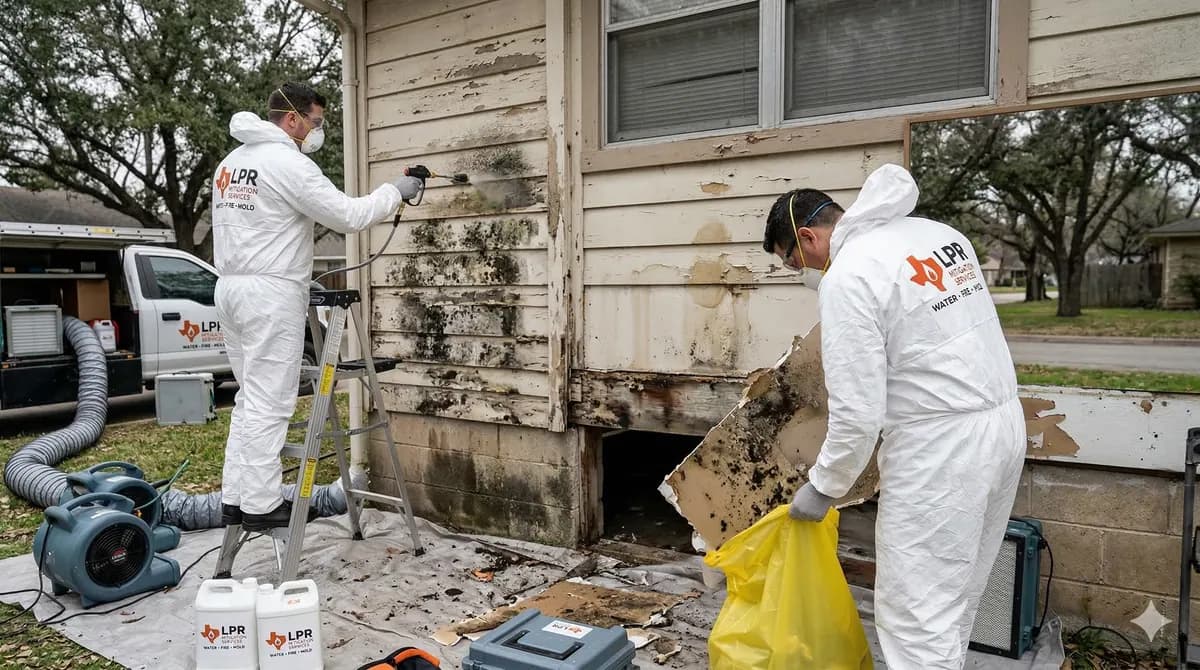
The single biggest cost driver. Small contained colonies under 10 sq ft are inexpensive. Anything between 10 and 100 sq ft requires full containment with negative air pressure, HEPA scrubbers running throughout, and proper PPE — all of which add labor and equipment cost. Above 100 sq ft, the project scales into multi-day remediation with significant material removal and replacement.
2. Materials Affected (Porous vs Non-Porous)
Mold on non-porous surfaces (tile, glass, sealed metal) can be cleaned and disinfected without removal — low cost. Mold on porous materials (drywall, insulation, carpet, untreated wood, ceiling tiles) cannot be cleaned and must be removed and replaced — significantly higher cost because you're paying for both the removal labor and the replacement materials.
3. Containment Complexity
Small jobs may need only a single containment barrier. Larger jobs require multi-zone containment, sometimes with airlocks between zones to prevent cross-contamination. Multi-zone containment adds materials and labor cost.
4. HVAC Involvement
If mold is present in the HVAC system or the air handler, professional HVAC decontamination is required — typically $500 to $2,500 added depending on duct system size. Without this, the system recontaminates remediated rooms every time it runs.
5. Reconstruction Scope
Mitigation (containment, removal, treatment, drying) is typically 40–60% of the project cost. Reconstruction (replacing drywall, insulation, paint, flooring, cabinetry) makes up the rest. Pure mold testing-and-treatment without rebuild is significantly cheaper than full restoration to pre-loss condition.
Does Insurance Cover Mold Remediation in Texas?
The answer depends on the cause:
- Mold from a covered water event (burst pipe, appliance failure, sudden roof leak after a storm) — typically covered, often subject to a separate mold sublimit on top of the water damage coverage.
- Mold from external flooding — covered under flood insurance (NFIP or private), not standard homeowners.
- Mold from long-term moisture, deferred maintenance, or slow leaks — generally not covered.
- Mold from condensation, humidity, or grading issues — typically not covered.
Many Texas policies carry a separate mold sublimit, often $5,000 or $10,000, on top of the standard water damage coverage. Coverage disputes are common — adjusters often try to categorize mold as “maintenance” when it actually resulted from a covered event. Learn more about Texas water damage and mold insurance coverage.
The single biggest factor in mold claim payout is documentation. Photos of the moisture source, timeline of when the leak occurred and was repaired, professional moisture readings, lab-tested air samples — these turn a coverage dispute into a paid claim. LPR's in-house claims specialist documents this on every project.
Free Mold Inspection — Houston, TX
Get a free, written mold remediation scope and cost estimate before committing. LPR is TDLR-licensed and IICRC S520 certified. Our in-house claims specialist reviews your policy at no charge.
Mold Remediation Cost FAQs
How much does mold remediation cost in Texas?
Texas mold remediation typically costs $500 to $20,000+ depending on scope. Small contained mold runs $500 to $1,500. Mid-size remediation (1–3 rooms, 10–100 sq ft, drywall removal, containment) runs $2,000 to $6,000. Whole-home or post-flood remediation runs $6,000 to $20,000+. Pricing depends on square footage, materials removed, containment complexity, and whether reconstruction is included.
Does homeowners insurance cover mold remediation in Texas?
Yes, when the mold was caused by a covered water event (burst pipe, appliance failure, sudden roof leak). Mold from long-term moisture, deferred maintenance, or external flooding is generally excluded from standard homeowners and may require flood insurance. Many Texas policies carry a separate mold sublimit ($5,000 to $10,000) on top of the water damage coverage.
How much does black mold removal cost?
Black mold (Stachybotrys) removal costs the same as other mold species when handled by a TDLR-licensed company following IICRC S520 protocol. Pricing is based on scope, not species. Beware of contractors who quote dramatically higher prices specifically for “black mold” — that is fear-based pricing, not science.
How much does a mold inspection cost in Houston?
Standalone mold inspection in Houston typically costs $300 to $650 depending on home size and tests requested (visual, moisture mapping, surface samples, air samples). If you proceed with remediation through the same company, the inspection fee is typically credited toward the remediation invoice.
Why is mold remediation more expensive than just cleaning?
Cleaning is not remediation. Professional remediation includes containment with negative air pressure, HEPA air scrubbing throughout, removal and replacement of porous contaminated materials (drywall, insulation, carpet), antimicrobial treatment, moisture source repair, and post-clearance testing. DIY surface cleaning misses every step except the first one — and Houston humidity guarantees regrowth without the rest of the protocol.
Related Mold & Insurance Resources
- Mold Remediation Houston — Black Mold Removal Near You →
- Signs of Mold in Your Houston Home →
- Mold Remediation vs Mold Removal: A Houston Guide →
- Water Damage Restoration (Prevents Mold) →
- Does Insurance Cover Water Damage in Texas? →
- Insurance Claims Assistance for Damage Restoration →
- Schedule a Free Mold Inspection →