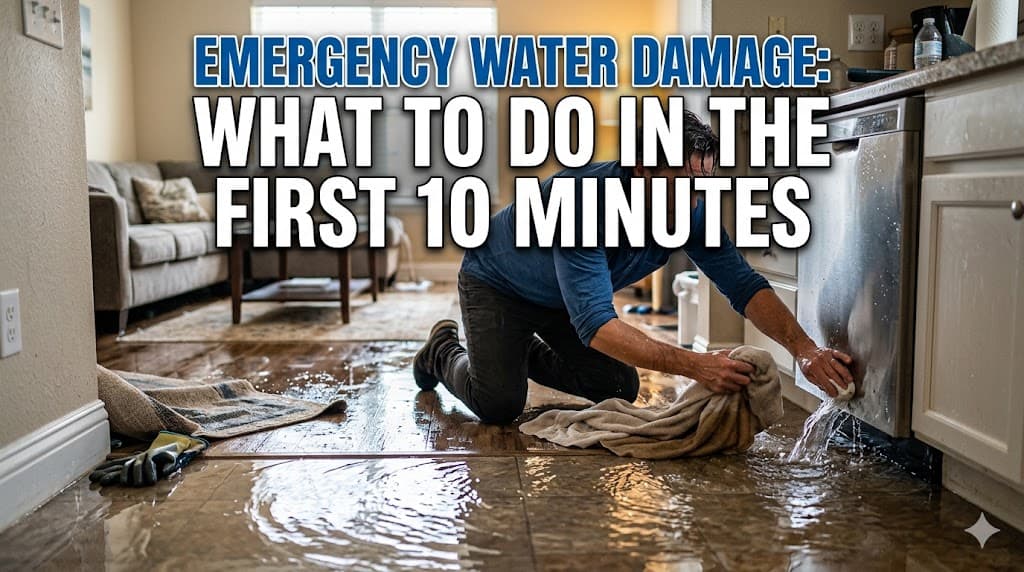
Water is pouring into your Houston home right now — from a burst pipe, a failed appliance, a roof leak, or rising floodwater. Every minute that passes, the damage gets worse and the cost goes up. This guide tells you exactly what to do, in what order, starting right now.
As IICRC-certified water damage restoration professionals who respond to emergencies across Harris County, Fort Bend County, Montgomery County, Galveston County, and Chambers County, we have seen hundreds of water damage situations. The homeowners who act fast in the first 10 minutes consistently end up with less damage, lower repair costs, and fewer complications with insurance claims.
The First 10 Minutes: What to Do Immediately
Before you do anything else, you need to protect yourself and stop the damage from getting worse. These are the actions that matter most in the first few minutes after discovering water damage.
1. Ensure Everyone's Safety First
Water and electricity are a deadly combination. Before you step into any standing water, check whether it could be in contact with electrical outlets, appliances, or wiring. If water is anywhere near your electrical panel, outlets, or appliances that are plugged in, do not walk through it. Get everyone — including pets — out of the affected area immediately.
If you smell gas or hear hissing from a gas line, leave the house immediately and call 911 from outside. Do not turn on or off any electrical switches if you suspect a gas leak.
2. Shut Off the Water Source
If the water is coming from a burst pipe, failed water heater, washing machine, or any other plumbing source, find and turn off the water supply. For a localized issue — like a burst supply line under a sink — close the individual shut-off valve at the fixture. If you cannot identify the specific source or if multiple areas are affected, shut off the main water supply to the entire house. In most Houston homes, the main shut-off valve is located near the front of the house, close to the water meter at the street.
If the water is coming from outside — storm flooding, a neighbor's property, or a municipal water main break — you cannot stop the source. Focus on protecting yourself and moving valuables above the water line.
3. Turn Off Electricity to Affected Areas
If you can safely reach your electrical breaker panel without stepping in water, turn off the breakers for every room and area where water is present. If the breaker panel itself is in a flooded area, do not touch it. Call CenterPoint Energy at 713-207-2222 or 911 to have power disconnected from outside.
Even after shutting off breakers, do not plug in or use any electrical equipment that has been in contact with water until it has been inspected by a licensed electrician.
4. Call a Professional Restoration Company
Once you and your family are safe and the water source is stopped, call a professional emergency water damage restoration company. Professional crews have commercial-grade water extraction equipment that can remove hundreds of gallons per hour — far beyond what a shop vacuum or towels can accomplish. In Houston's humidity, every hour of delay allows water to penetrate deeper into drywall, subfloors, cabinets, and insulation.
Water Damage Right Now? Call Us Immediately.
LPR Mitigation Services provides 24/7 emergency water damage response across Greater Houston. We can typically arrive within 60 minutes. The faster we start extraction and drying, the less damage your home sustains.
Step-by-Step Emergency Water Damage Checklist
Once the immediate danger has passed and help is on the way, work through this checklist to minimize damage while you wait for the restoration crew.
- Document everything before you touch anything. Take photos and video of every affected room from multiple angles. Capture the water level, damaged belongings, and the source of the water if visible. This documentation is critical for your insurance claim — do this before you start any cleanup.
- Move furniture off wet carpet and flooring. Place aluminum foil or plastic blocks under the legs of furniture sitting on wet carpet to prevent wood stain transfer and further damage. If you can safely move lightweight items to a dry area, do so.
- Remove valuables, documents, and electronics from the affected area. Prioritize irreplaceable items — family photos, legal documents, electronics, and medications. Move them to a dry, elevated location.
- Begin removing standing water if you can do it safely. Use a mop, towels, or a wet/dry vacuum to remove as much standing water as possible. Even removing a small amount of water helps slow the damage progression while you wait for professional equipment.
- Open windows and doors to improve air circulation — but only if weather and outdoor humidity conditions allow. If it is raining or extremely humid outside (common in Houston), keep windows closed and run your air conditioning instead. The AC acts as a dehumidifier.
- Do not turn on your HVAC system if ductwork is in the flooded area. Contaminated water inside ductwork will spread bacteria and mold spores throughout the entire house when the system runs.
- Lift curtains, drapes, and fabric off wet floors. Loop them through a hanger or pin them up so they are above the water line.
- Contact your insurance company. Report the damage as soon as possible. Most policies have time-sensitive requirements for reporting water damage claims. Take notes on who you spoke with, the claim number, and what they tell you to do (or not do) before the adjuster arrives.
What NOT to Do After Water Damage: Common Mistakes That Make It Worse
In the stress of dealing with water damage, homeowners often make well-intentioned mistakes that increase the damage, void insurance coverage, or create safety hazards. Avoid these at all costs.
- Do not use a regular household vacuum to remove water. Standard vacuums are not designed for water and will electrocute you or destroy the vacuum motor. Only use a wet/dry shop vacuum that is specifically rated for liquid pickup.
- Do not turn on ceiling fans or light fixtures in rooms with wet ceilings. Water may have reached the electrical wiring above. Running electricity through water-damaged wiring creates a fire and electrocution risk.
- Do not rip out wet drywall or flooring yourself. While it may seem proactive, premature demolition can release mold spores into the air, void your insurance coverage if the adjuster has not yet documented the damage, and expose you to contaminated water hidden inside wall cavities. Wait for the adjuster and restoration professionals to assess the damage first.
- Do not use bleach to “kill mold” on porous surfaces. Bleach does not penetrate porous materials like drywall or wood. It kills surface mold but leaves the root structure intact, and the water content in bleach actually adds moisture that feeds regrowth.
- Do not place wet items in sealed plastic bags or containers. Sealing wet items traps moisture and accelerates mold growth. Instead, lay items flat on dry surfaces or hang them to air dry.
- Do not ignore “small” leaks. A slow drip behind a wall can saturate an entire wall cavity in 24 hours. In Houston's climate, that saturated cavity will develop mold within another 24 hours. There is no such thing as a small water leak inside a wall.
When Water Damage Is an Emergency vs. When It Can Wait
Not every water damage situation requires a 2 AM phone call — but many do. Here is how to tell the difference.
Call Immediately (24/7 Emergency)
- A burst pipe, water heater failure, or major appliance leak that is actively flooding your home
- Any situation where water has reached electrical systems or outlets
- Sewage backup from toilets, floor drains, or the main sewer line
- Storm damage that has breached your roof or walls and rain is continuing
- Standing water that is more than an inch deep in any room
- Water damage to multiple rooms or levels of your home
Can Wait Until Business Hours (But Do Not Wait More Than 24 Hours)
- A small, contained leak from a faucet or toilet that has been shut off
- Minor condensation damage on a single window or pipe
- A small appliance leak (dishwasher, refrigerator ice line) that has been stopped and the water is limited to a small area of hard flooring
When in doubt, call. A quick phone conversation with an emergency restoration professional can help you determine whether your situation needs immediate response or can wait until morning.
The Three Categories of Water Damage (and Why It Matters)
Restoration professionals and insurance companies classify water damage into three categories based on the contamination level of the water. The category determines the safety precautions required, the restoration methods used, and what your insurance will cover.
Clean Water
From sanitary sources — broken supply lines, faucets, water heaters, or uncontaminated rainwater.
Health Risk
Low — no immediate hazard
DIY Possible?
Small areas on hard surfaces only
Warning
Degrades to Category 2 after 48 hours in Houston heat
Gray Water
Contains contamination — washing machine overflow, dishwasher discharge, toilet with urine, HVAC condensate.
Health Risk
Moderate — illness from contact or ingestion
DIY Possible?
Not recommended — needs antimicrobial treatment
Warning
Degrades to Category 3 if left 48+ hours
Black Water
Grossly contaminated — sewage backups, floodwater from bayous, any stagnant water 48+ hours.
Health Risk
Severe — serious illness, toxic exposure
DIY Possible?
Never. Professional restoration required.
Action Required
All porous materials must be removed
How Fast Mold Grows After Water Damage in Houston
Houston's subtropical climate makes mold growth after water damage almost inevitable without rapid professional intervention. Here is the typical timeline.
Mold spores land on wet surfaces and begin germinating. No visible growth yet — but the clock is ticking. This is your best chance to prevent mold entirely with fast water extraction and professional drying.
Mold colonies establish on wet drywall, carpet backing, and wood framing. In Houston's humidity, growth accelerates. A musty smell may become noticeable. Professional intervention still prevents major spread.
Visible mold growth appears. Colonies produce spores that spread to adjacent materials. Your project has now expanded from water damage restoration to include mold remediation — significantly increasing cost and timeline.
Mold has penetrated deep into building materials. Structural components may be compromised. Remediation scope has expanded substantially. Health risks for occupants are now elevated. A $5,000 water damage job can become a $25,000+ restoration.
This timeline is why we emphasize speed. Professional dehumidification and drying services deployed within the first 24 hours can prevent mold growth entirely in most cases. Every hour of delay after that makes mold increasingly likely.
When to Call a Professional vs. Handle It Yourself
You can likely handle water damage cleanup yourself if all of the following are true: the water is clean (Category 1), the affected area is a single small room or less, only hard surfaces are affected (tile, concrete, vinyl), you can dry the area completely within 24 hours, and no water has reached drywall, insulation, or subfloors.
You need a professional restoration company if any of the following are true:
- Water has soaked into drywall, carpet, or wood for more than a few hours
- The water source is contaminated (gray or black water)
- Multiple rooms or floors are affected
- You cannot identify where the water is coming from
- More than 24 hours have passed since the water damage occurred
- You smell mold or see visible mold growth
- You need to file an insurance claim (professional documentation strengthens your claim)
Professional restoration companies use commercial-grade dehumidifiers, air movers, moisture meters, and thermal imaging cameras that detect hidden moisture inside walls and under floors — equipment that is not available at consumer rental stores.
How to Document Water Damage for Insurance Before Cleanup Starts
Proper documentation before cleanup begins is the single most important factor in getting your insurance claim approved and fully paid. Insurance adjusters need evidence of the cause, the extent, and the timeline of the damage. Here is exactly what to document.
- Photograph and video every affected area. Take wide-angle shots of entire rooms, then close-up photos of specific damage — water lines on walls, saturated carpet, damaged belongings, the source of the water. Include a timestamp on your camera or phone.
- Photograph the source of the water. If a pipe burst, photograph the pipe. If an appliance failed, photograph the appliance and model number. The source determines whether your policy covers the damage.
- Create a written inventory of damaged items. List each damaged item with a description, approximate age, and estimated replacement cost. Your insurance company will request this for personal property claims.
- Save all receipts. Keep receipts for emergency supplies, hotel stays (if you are displaced), meals, and any emergency repairs. Most policies cover reasonable emergency expenses under “additional living expenses” coverage.
- Do not throw anything away until the adjuster has inspected. Insurance adjusters need to see the damage in person. If you must remove items for safety (sewage-contaminated materials, for example), photograph them thoroughly first and keep a sample if possible.
- Write a timeline of events. Note when you discovered the damage, when you shut off the water, when you called for help, and every action you took. This written record protects you if the insurance company questions your response.
LPR Mitigation Services works directly with insurance companies and provides detailed damage documentation, moisture mapping reports, and itemized scope-of-work estimates that adjusters require. Our insurance claims assistance team can guide you through the entire process from initial report to final payment.
Frequently Asked Questions About Emergency Water Damage
How long do I have before water damage causes mold in Houston?
In Houston's humid climate, mold can begin growing within 24 to 48 hours after water damage occurs. The combination of standing water and Houston's average humidity levels above 75% creates ideal conditions for rapid mold colonization. This is why professional water extraction and drying should begin as soon as possible — ideally within the first 12 hours. Delaying even one day can turn a straightforward water damage restoration into a full mold remediation project.
Should I turn off electricity if my house floods?
Yes, but only if you can safely reach the breaker panel without stepping in standing water. Water and electricity create a life-threatening electrocution hazard. If the breaker panel is in a flooded area, do not attempt to reach it — call your electric utility provider or 911 to have power disconnected from outside. Never use electrical appliances or touch light switches while standing in water.
Does homeowners insurance cover emergency water damage in Texas?
Most Texas homeowners insurance policies cover sudden and accidental water damage — such as a burst pipe, appliance malfunction, or water heater failure. However, damage from gradual leaks, poor maintenance, or external flooding is typically excluded. Flood damage requires a separate flood insurance policy. Documenting the damage immediately with photos, video, and a written timeline is critical for a successful claim. LPR Mitigation Services works directly with insurance companies and can help you navigate the claims process.
Can I clean up water damage myself or do I need a professional?
Minor water damage from a small, clean water spill on hard surfaces can often be handled yourself if you dry the area thoroughly within a few hours. However, you should call a professional restoration company if the water is from an unknown source, if it contains sewage or gray water, if drywall or insulation is wet, if the affected area is larger than a single room, or if more than 24 hours have passed since the damage occurred. Professional equipment — including commercial dehumidifiers, air movers, and moisture meters — removes water far more effectively than household tools.
Do Not Wait. Water Damage Gets Worse Every Hour.
LPR Mitigation Services provides 24/7 emergency water damage restoration across Greater Houston. We handle water extraction, structural drying, mold prevention, and insurance documentation — all from a single call. The sooner we start, the more we can save.
Emergency Water Damage Resources for Houston Homeowners
- Water Damage Restoration Company (Near Me) — Houston TX →
- 24/7 Emergency Water Damage Response in Houston →
- Mold Remediation After Water Damage (TDLR Licensed) →
- Water Damage Insurance Claims Help for Texas →
- Structural Drying & Dehumidification Services →
- How Much Does Water Damage Restoration Cost in Texas? →
- Does Homeowner Insurance Cover Water Damage in Texas? →
- Free Water Damage Inspection in Greater Houston →